The Head Start/Early Head Start program has collaborated with Food for Salud to promote nutrition and wellness for South Florida families by expanding access to healthy foods and educational resources. Together, they support children and caregivers through community outreach.
Summer can be a wonderful time for families — longer days, more time together, and a break from the school routine. For many families, it can also bring added stress when school meals are no longer available.
During the school year, many children count on free or reduced-price breakfast and lunch. When summer starts, that support may not be there in the same way. We want parents and caregivers to know they are not alone, and there are resources and simple ideas that can help children stay healthy and well fed all summer. The Head Start/Early Head Start program, which provides high quality comprehensive early childhood and family engagement, offers families the following practical solutions to keeping kids nourished all summer long.
Why Nutrition in the Summer Matters
Children’s bodies are growing rapidly. Good nutrition does more than fill a child’s stomach. It helps support growth, learning, energy, focus, and overall health. When children do not have regular access to healthy meals, it can affect how they feel, how they behave, and how they grow.
The good news is that summer does not have to mean a gap in nutrition. With the right support and a few practical strategies, families can help children continue eating well even when school is out.
Free Summer Meal Programs: Know Before You Go
The USDA’s Summer Food Service Program (SFSP) and Seamless Summer Option offer free meals for children and teens 18 and under at sites in many communities. Families do not need to show proof of income or sign up ahead of time.
How to find a site near you:
Meal sites are often located at schools, parks, libraries, community centers, and faith-based organizations. Meals are free, and at many sites, children do not need to be accompanied by an adult to receive one.
Smart, Low-Cost Nutrition at Home
If your grocery budget feels tight, you still have plenty of ways to put together healthy meals and snacks. Here are a few practical ideas:
- Start with affordable basics. Eggs, beans, lentils, tuna, peanut butter, oats, rice, and frozen vegetables are healthy, low-cost staples. A peanut butter or sunbutter sandwich on whole grain bread with a banana can make a simple, balanced meal.
- Frozen fruits and vegetables are a smart choice. They often cost less than fresh produce, last longer, and still provide important nutrients. Frozen peas, corn, broccoli, berries, and edamame are all good options.
- Use ingredients in more than one meal. A can of beans can be taco filling one day and soup the next. Hard-boiled eggs also make easy meals and snacks. Simple steps like this can help stretch your budget.
- Make water the main drink. Drinks like juice, sports drinks, and flavored milk can add a lot of sugar without much nutrition. If plain water feels boring, add lemon, cucumber, or frozen berries.
- Let kids help in simple ways. Children are often more willing to try foods they help prepare. Washing produce, stirring, pouring, or making a sandwich can make meals easier and more fun.
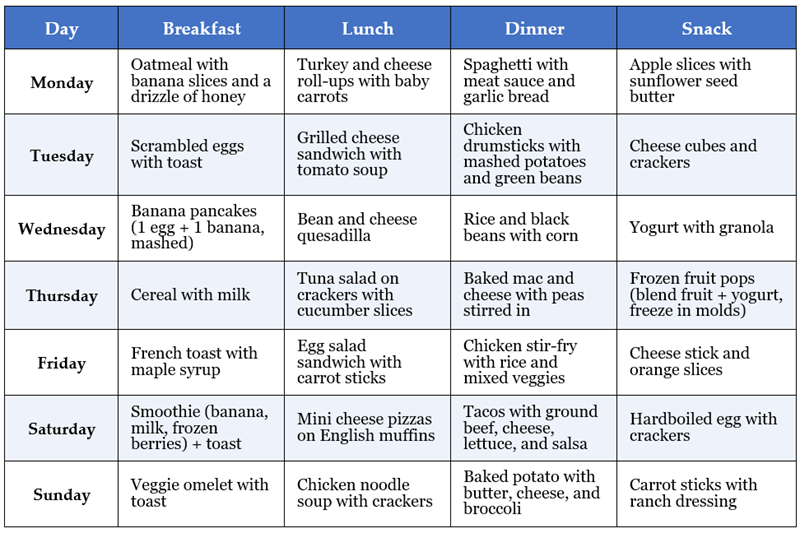
Budget-Friendly Weekly Meal Ideas for Kids
Meals like this can be low-cost while still giving growing children the protein, fiber, healthy fats, vitamins, and minerals they need. Make sure to include protein, carbohydrates, vegetables, fruit and dairy in your child’s meals.
Additional Resources for Families
If you need extra support, there are programs that may be able to help:
-
SNAP (Supplemental Nutrition Assistance Program): Offers monthly food benefits for eligible families. You can apply through your local Department of Social Services or online at benefits.gov.
-
WIC (Women, Infants, and Children): Supports pregnant and postpartum women and children under 5 with food benefits, nutrition support, and breastfeeding help.
-
Local food banks and pantries: Many offer extra summer support for families with children. Call 211 or visit feedingamerica.org to find one nearby.
-
Community gardens: Some neighborhoods have free community gardens where families can grow or pick fresh produce.
-
Your child’s pediatrician: If you are worried about your child’s eating, growth, or access to food, speak with your child’s pediatrician.
Every child deserves access to healthy food and the chance to grow, learn, and thrive. If you have questions about nutrition or need help finding local resources, consider reaching out to a trusted community organization, school, or family support program for guidance.
Give Your Kids a Head Start
The Community Services Department’s Head Start/Early Head Start is a program for children 0-5 years of age that offers high quality comprehensive early childhood and family engagement for income-eligible families. Eligible children receive breakfast, lunch and snack free at this preschool program and babies are fed formula and baby food free of cost to parents.
If you are interested in learning more about the Head Start/Early Head Start program, call 786-469-4622 or email headstartinfo@miamidade.gov.
About Food for Salud
Food for Salud is a multi-faceted initiative launched at Nicklaus Children’s in 2022 that uses the power of food and nutrition to promote the wellbeing of South Florida children and families. There are many benefits to eating well, from disease prevention to overall health and wellness. Food for Salud supports access to nutritious food and brings healthy eating tips and recipes to kids in local schools and to families at various community events throughout the year.